
Does your child play?
If your child or teenager knows the “rules” of making friends but completely freezes on an unstructured school playground or during a high-stakes university group project, they do not need more lectures on manners. They need a predictable, low-stress bridge from structured tasks to spontaneous connection. As the saying goes the playground maze of today directly mirrors the corporate boardroom of tomorrow.
The Playground & Classroom Gap: Arena vs. Engine
When individuals, including neurodivergent with ADHD, Autism, or speech-language differences, struggle socially, standard advice says to “arrange more playdates” or “join more clubs.” However, unstructured social environments act as unpredictable sensory and organisational mazes.
To understand why social interactions break down at any age, we must look at how two distinct systems interact:
- The Social Arena (Levels of Engagement): The external environmental structure and its hidden social rules.
- The Cognitive Engine (Social Awareness & Executive Functioning): The internal neurological processing power, memory, and impulse control.
The gap happens when the external Social Arena demands more processing power and organisation than the internal Cognitive Engine can handle. When this mismatch occurs, an individual experiences cognitive overload, intense anxiety, social burnout, and behavioural breakdown.
The Developmental Ladder of the Social Arena
Social engagement scales up through four distinct developmental levels. As the level rises, adult-led structure disappears, and peer complexity spikes:
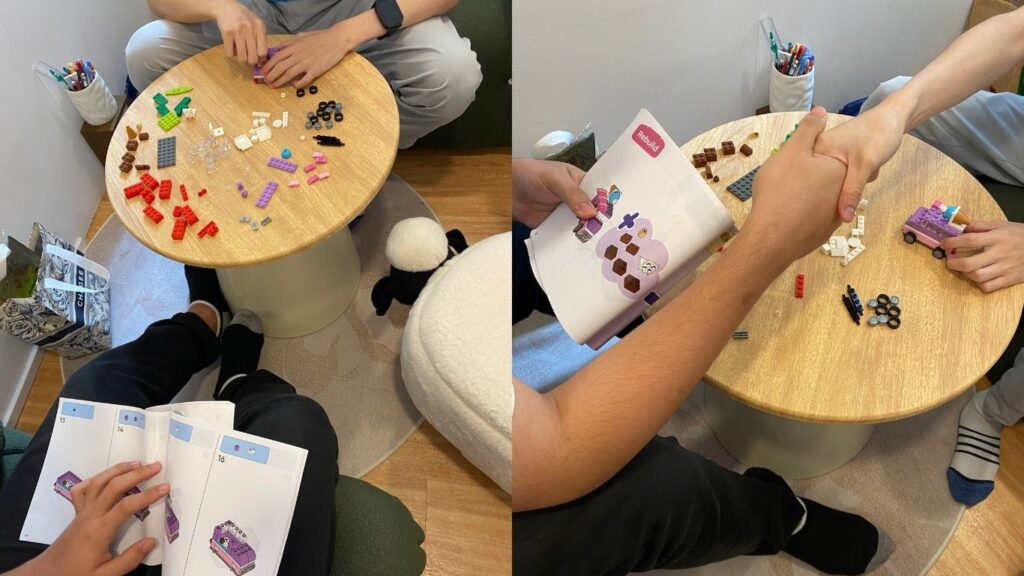
- Level 1: Independent Alignment (Parallel Tasks) – An individual works or plays independently with their own materials while calmly sharing a physical space.
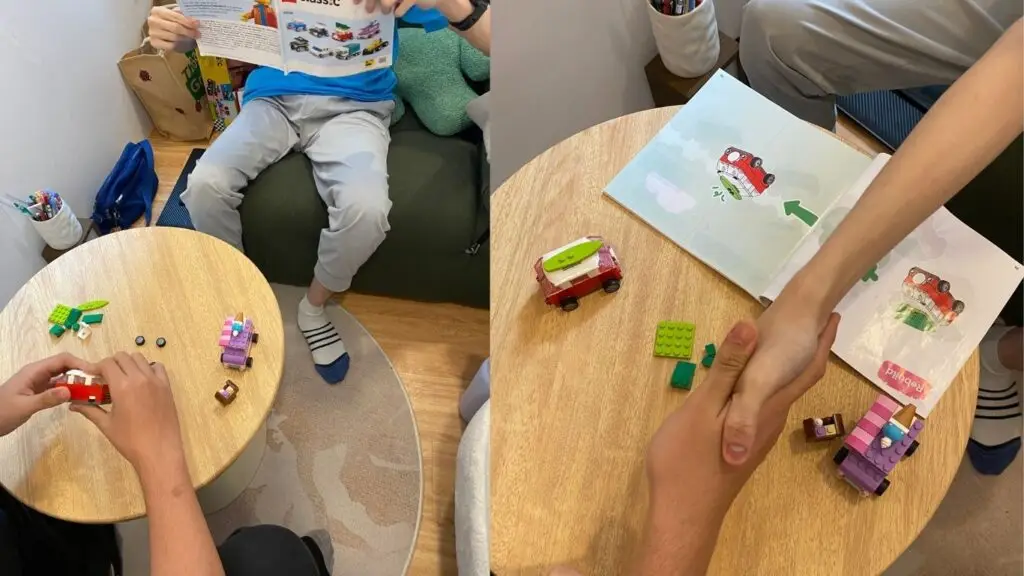
- Level 2: Shared Coordination (Cooperative Basics) – An individual transitions to a shared goal, actively swapping materials, tools, or basic information with a peer.
- Level 3: Structural Navigation (Games & Projects with Rules) – An individual operates within fixed guidelines, managing their behavior during structured routines like turn-taking or following a strict classroom rubric.
- Level 4: Group Synergy (Dynamic Teamwork) – The highest tier. Roles are fluid, communication is constant, and individuals must collectively negotiate unscripted creative choices, handle conflicting personalities, and self-organize.
The Internal Engine: Three Core Dimensions of Social Awareness
To climb this ladder successfully from childhood through adulthood, an individual’s internal cognitive engine must actively process three core components of social awareness in real time:
- Perspective-Taking: Understanding that a peer or colleague has a separate creative vision, unique feelings, priorities, or a different working style.
- Non-Verbal Cue Processing: Reading silent data, such as a peer’s open hand for a tool, a teammate’s hesitant sigh, or a manager’s tilted posture showing frustration, without draining mental energy.
- Conversational Repair & Flexibility: Knowing how to adapt when a misunderstanding occurs, asking for clarification, and accepting compromises instead of shutting down or becoming defensive.
The Co-Pilot Engine: Executive Functioning (EF)
Social awareness does not operate in a vacuum. To execute perspective-taking or conversational repair, the brain relies heavily on executive functioning, the CEO of the brain. When an individual is neurodivergent (such as having ADHD or Autism), EF challenges run parallel to social difficulties:
- Working Memory: Holding a peer’s instructions or a group project’s goals in mind while simultaneously formulating a response.
- Inhibitory Control: Managing the impulse to interrupt, take over the project, or walk away when frustrated.
- Cognitive Flexibility: Switching strategies seamlessly when a construction brick doesn’t fit, a deadline changes, or a teammate proposes a completely different idea.
Why It Matters: The Lifelong Functional Trajectory
These dimensions of social awareness and executive functioning are the exact functional building blocks an individual needs to successfully navigate the increasing complexity of life. When these skills are missing, the challenges evolve and intensify at every major milestone.
1. The Transition to Secondary School
- The Functional Need: Shifting from teacher-led primary school routines to navigating a complex web of teenage cliques, unspoken social hierarchies, intense peer pressure, and moving between multiple classrooms independently.
- The Challenges That Occur: Without perspective-taking, an adolescent cannot decipher the complex social motivations of their peers, leading to social isolation or vulnerability to bullying. Simultaneously, poor executive functioning causes them to drop the ball on assignments, leading to severe academic overwhelm, school burnout, and school refusal.
2. The Move to Tertiary Education (ITE, Polytechnic, University)
- The Functional Need: Tertiary education removes the structure of uniform classrooms. Success hinges almost entirely on high-stakes, student-led group projects, time management, and independent networking.
- The Challenges That Occur: Without conversational repair and flexibility, an individual cannot manage the friction of group work. When group members disagree on assignments, the individual may take feedback as a personal attack, shut down, or walk away. Paired with EF deficits like chronic procrastination or disorganisation, they face academic failure, broken team dynamics, and severe anxiety.
3. Entering the Professional Workplace
- The Functional Need: The modern workplace is a continuous, fluid loop of Level 4 Group Synergy. It demands cross-functional teamwork, managing reporting hierarchies, reading client emotions, and collaborating across diverse professional communication styles.
- The Challenges That Occur: Technical brilliance alone cannot overcome a deficit in non-verbal cue processing and executive functioning. In corporate spaces, an individual who cannot read a supervisor’s unspoken frustration, struggles to estimate project timelines, or cannot adapt to changing project briefs will struggle to pass probation. They often face chronic underemployment, workplace conflict, or rapid career burnout despite having a high IQ.
The Interaction Matrix: Why Communication Breaks Down
As an individual moves up the levels of education and employment, external rules disappear. This shifts the entire burden onto their internal cognitive engine. If these internal dimensions are still developing, specific clinical breakdowns occur:
Profile 1: The “Structured Rule-Follower”
- The Dynamic: High Level 3 performance, Low Dimension 3 flexibility & Low Cognitive Flexibility.
- The Breakdown: This individual thrives during structured school exams or highly prescriptive workplace tasks because clear rules dictate behavior. However, the moment settings shift to recess, unstructured university group meetings, or corporate brainstorming sessions, they experience a crisis. Without rigid rules, peer variations feel like chaos, causing them to police others rigidly, micromanage, or withdraw entirely.
Profile 2: The “Socially Overwhelmed Masker”
- The Dynamic: High Level 2 desire, Low Dimension 2 cue processing & Low Working Memory.
- The Breakdown: This individual desperately wants to cooperate and build connections with peers or colleagues. But because they struggle with non-verbal cue processing, they miss a classmate’s or coworker’s closed body language or signs of sensory irritation. Because their working memory is overloaded trying to keep up with the conversation, they cross boundaries without knowing it, leading to sudden social rejection or workplace isolation.
How Our Combined Approach Fixes the Equation
Traditional environments fail because they force an individual straight into Level 3 (Structural Navigation) or Level 4 (Group Synergy) while demanding peak performance across all social and organizational dimensions at once. It is simply too much data to process.
At Joyful Soul Psychology, we resolve this mismatch early through two parallel, evidence-informed interventions that set the stage for future adult success:
1. Expert-Facilitated LEGO®-Based Therapy (Ages & Stages Matched Groups)
- We Lock the Social Arena: By using hardcoded clinical roles (Engineer, Supplier, Builder), we hold the play level steady.
- We Lower Cognitive Load: Predictable scripts remove environmental guesswork.
- We Isolate the Internal Dimensions: With processing bandwidth cleared, facilitators systematically target, coach, and strengthen Perspective-Taking and Conversational Repair in real time.
2. Integrated Executive Function & Coaching
- Targeted Strategy Building: We teach individuals how to map out multi-step tasks, manage their time, and build organizational systems that work for their unique neurotype.
- Emotional Regulation Support: We provide practical toolkits to help adolescents and adults handle rejection sensitivity, manage frustration during group work, and navigate workplace communication dynamically.
By strengthening these core internal dimensions early and running executive function coaching in parallel, we give individuals the exact tools they need to build lasting childhood friendships, navigate the complexities of higher education, and thrive in their future careers.
Take the Next Step with Joyful Soul Psychology
Help your child transform short-term session wins into lasting, lifelong communication and organisational confidence. Our intake process ensures each individual is matched with a peer group at a compatible developmental stage to optimise growth.
Our small-group and individual programs are designed and delivered by qualified professionals.
- Venue: Joyful Soul Psychology, 171 Tras Street, Union Building, #08-171A, Singapore 079025
- WhatsApp: +65 8835 3015
- Email: contact@joyfulsoulpsychology.com
Is LEGO® content proprietary? Trademark note
LEGO® is a trademark of the LEGO Group. We use the term descriptively to identify the therapeutic medium; the LEGO Group does not sponsor, endorse, or authorise this programme.
Further reading (academic & practical)
- Primary research & program manuals: LeGoff, D. B. (2004); LeGoff, D. B., Gómez de la Cuesta, G., Krauss, G. W., & Baron-Cohen, S. (2014); Legoff, D. B., Krauss, G. W., & Baron-Cohen, S. (2018); LeGoff, D. B. (2019 workshop materials). See full references below.
- Practitioner summary: Celestine, N. (2021, updated July 17, 2025). Lego Therapy: How Play Can Heal People (+ Resources). PositivePsychology.com. This accessible article provides downloadable worksheets and practical tips families often find helpful: https://positivepsychology.com/lego-therapy/

