Beyond the Verbal Bottleneck: A Neurodiversity-Affirming Framework for Deep Work
EXECUTIVE SUMMARY
- The Problem: Traditional talk therapy and linear coaching frameworks potentially may overwhelm ADHD and autistic clients, triggering masking behaviours and cognitive fatigue.
- The Clinical Reality: Forcing abstract, top-down verbal reflection can cause severe performance anxiety, especially for clients navigating alexithymia or executive dysfunction.
- The Solution: Shifting from internal verbal tracking to external, associative visual tools like OH Cards lowers cognitive load, provides safe projective distance, and respects unique neurodivergent differences.
As therapists, counselors, and coaches, our goal is to create spaces where clients can drop their armour and connect with their authentic selves. However, standard emotional processing, traditional inner child work, and parts mapping share a hidden constraint: they rely highly on top-down verbal processing.
For neurodivergent individuals, particularly those with ADHD, autism, or learning differences, this heavy reliance on spoken language can present a major barrier to care.
Providing neurodiversity-affirming care requires us to audit our tools. If an intervention forces a client to translate complex internal states using neurotypical communication standards, we are not accommodating their nervous system, rather we are taxing it.
The Hidden Tax: Why Traditional Talk Therapy Can Exhaust Neurodivergent Clients
When deep reflective work begins, neurodivergent clients frequently encounter distinct systemic hurdles that standard verbal therapy fails to address:
- The Bottleneck of Alexithymia: A significant percentage of autistic and ADHD individuals experience alexithymia, i.e. the clinical difficulty identifying, naming, and describing emotions. Asking a client, “What emotion are you feeling in your body right now?” can cause intense frustration and shutdown.
- The Masking Loop: Neurodivergent individuals spend massive amounts of mental energy trying to fit into neurotypical social structures. In a highly verbal therapy session, they may unconsciously deploy “verbal masking”, i.e. saying what they think the practitioner wants to hear rather than accessing their true internal state.
- Executive Function Overload: Tracking complex internal parts, historical timelines, and shifting emotional dynamics requires immense working memory. When a session becomes purely conversational, the client’s brain can experience cognitive fatigue, stalling the therapeutic process.
Looking for individualised support? Explore our 1-to-1 Neurodiversity-Affirming services at Joyful Soul Psychology.
Bypassing the Verbal Bottleneck: Visual Metaphors as Cognitive Anchors
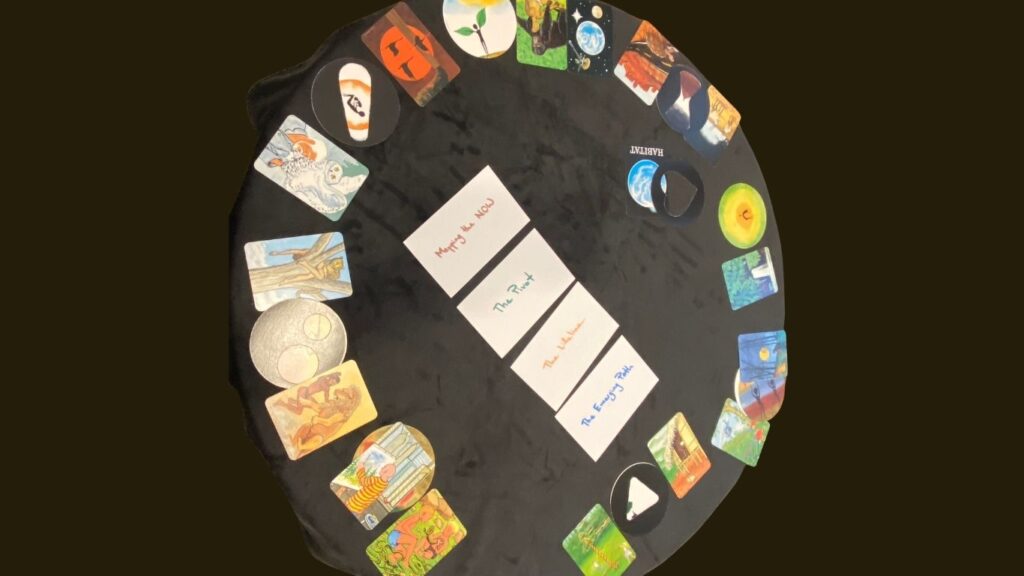
To shift away from a deficit-based model, we must design interventions that leverage their natural visual-spatial strengths. This is where physical, associative tools like OH Cards become clinical game-changers.
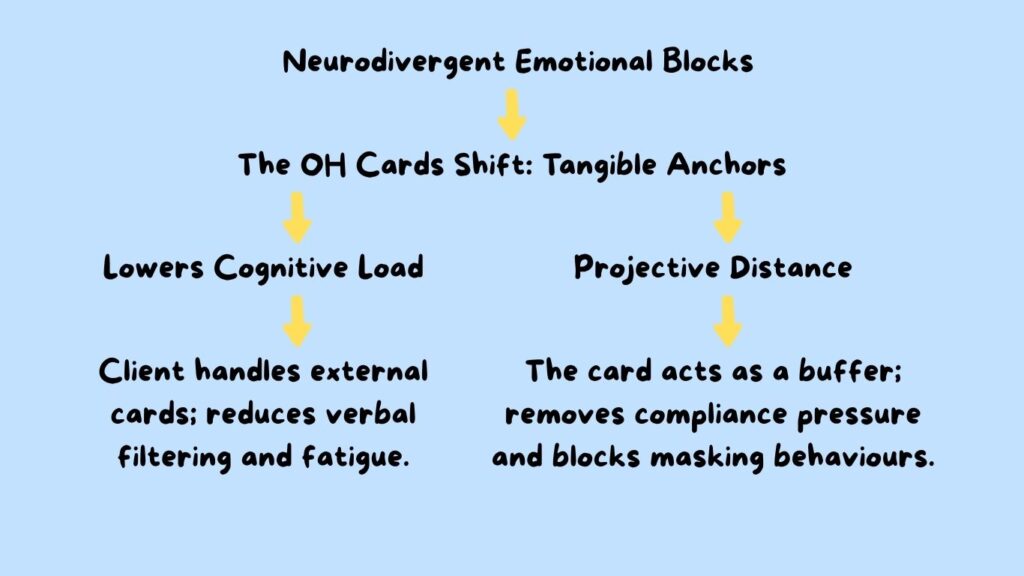
Instead of forcing a client to generate abstract descriptions from thin air, you place a physical picture and word card on the table. This adjustments changes the cognitive dynamic:
- It Minimizes the Processing Load: Looking at a concrete, external card anchors the client’s attention. They do not have to exhaust their working memory trying to track vague internal images. The visual layout does the holding for them.
- It Safely Bypasses Alexithymia: A client who cannot find the words to describe their anxiety can easily point to an abstract image and say, “That picture feels like how my chest operates today.” The metaphor acts as an interpreter, bridging the gap between raw physical sensation and language.
- It Disrupts the Masking Reflex: Because associative card pairings trigger spontaneous, right-brain processing, the logical ego lacks the time to construct a curated, masked answer. The reflection remains thoroughly authentic and client-led.
Designing a Strengths-Based Somatic Container
When utilising associative card frameworks with neurodivergent individuals, keep your delivery grounded in these three affirming parameters:
- 100% Client-Owned Vocabulary: Never correct or translate the client’s interpretation of a card. If an autistic client states that a chaotic visual card looks “peaceful and organized,” mirror their exact language. The cardholder is the absolute expert on their own metaphor.
- Tactile Sensations Over Internal Grids: Allow the client to physically handle the cards. The tactile motion of holding, moving, or pairing cards serves as an excellent sensory grounding mechanism, keeping their nervous system regulated during deep emotional processing.
- Focus on Function, Not Pathology: Use the cards to map how automatic defensive programs (the inner critic) serve a protective purpose, helping the client transition into a space of self-empathy and adaptive, adult-led strategies.
Master the Non-Directive Canvas with Mr Moritz Egetmeyer
To confidently support neurodivergent and neurotypical individuals using advanced projective tools, learning the precise mechanics of the modality from its root source is essential.
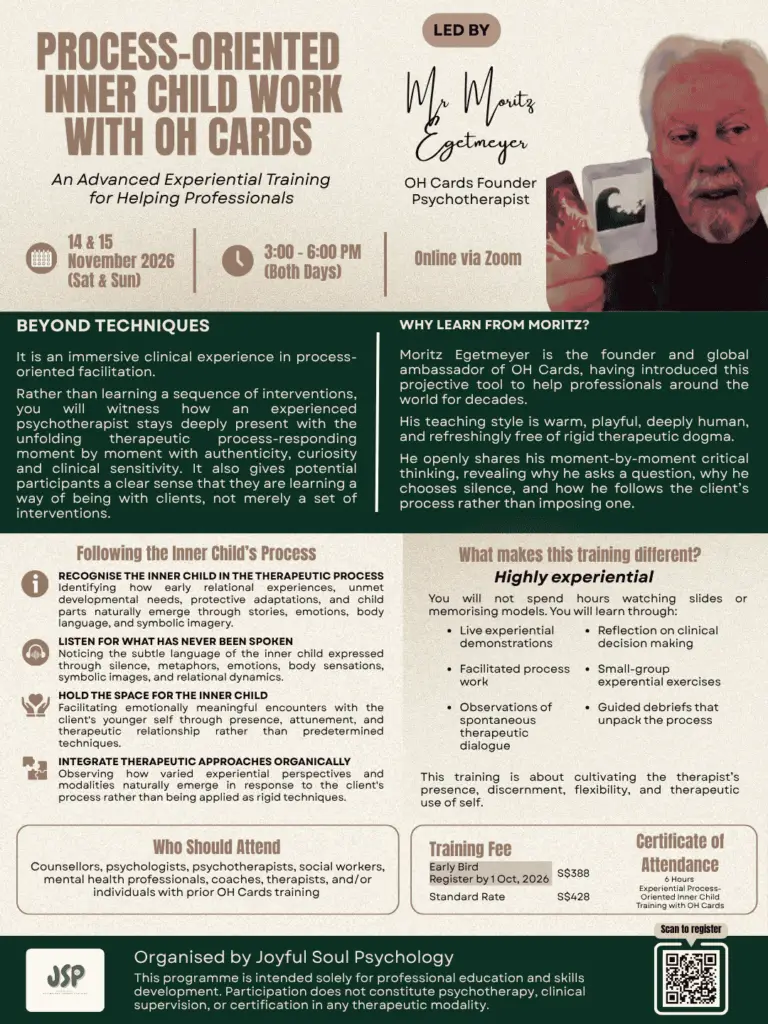
Join us at Joyful Soul Psychology for an immersive training featuring Mr Moritz Egetmeyer, the global founder of the OH Cards modality.
In this experiential workshop, you will learn how to seamlessly integrate associative card frameworks into your clinical practice, safely manage nervous system pacing, and deliver genuinely inclusive, strengths-based care that honours the unique wiring of every client. Start by trying it out yourself.
Register for the upcoming inner child work with OH Cards training by Mr Moritz = https://forms.gle/pTnyQztjYkRQzSd67
Email us jsp.wyeo@gmail.com or WhatsApp +65 8835 3015; Check out JSP IG = https://www.instagram.com/p/DQCC3_DAs1j