
Executive Summary
The Paradigm Shift: Shifting the parenting dynamic from directing a child’s care to supporting an autonomous young adult navigating communication transitions.
The Emotional Hurdle: Acknowledging the extreme vulnerability, masking fatigue, and anxiety that young adults face when addressing communication differences.
The Neurodiversity-Affirming Goal: Establishing functional, real-world communication confidence and self-advocacy rather than enforcing strict compliance to neurotypical norms.
The Ultimate Takeaway: Forcing speech strategies leads to resistance; cultivating autonomy creates transformation. Parents must adapt their home environment to prioritize processing space and relational validation to maximize therapeutic success.

to support them without causing resistance.
When a child is young, managing their speech and language development is entirely parent-driven. Scheduling the sessions, sitting in the therapy room, tracking the milestones, and prompting them to practice their sounds at the dinner table.
However, when your child crosses the threshold into young adulthood (ages 17–25, this age gets younger everyday), the entire landscape shifts.
Suddenly, communication challenges are no longer just about speech clarity or basic grammar. They manifest as anxiety during university presentations, intense dread before a job interview, difficulties navigating workplace dynamics, or social isolation in a fast-paced environment like Singapore.
At this developmental stage, the traditional parent-driven approach stops working. In fact, applying the same childhood pressure often leads to resistance, deep vulnerability, or withdrawal.
As an experienced, neurodiversity-affirming speech-language pathologist (SLP) at Joyful Soul Psychology, I see this tension frequently. Supporting a young adult through speech and language therapy requires a complete paradigm shift. Here is the clinical reality of what your young adult is facing, and how you can adapt your approach to help them cope, thrive, and build authentic communication confidence.
The Internal Landscape: What Your Young Adult Experiences in Therapy
Communication is deeply tied to identity. For a young adult, stepping into a speech therapy session requires immense courage. To help them cope, we must first understand the unique psychological burdens they carry:
1. Intense Vulnerability and Exposure
Unlike children, young adults are acutely aware of how they sound and how they are perceived by peers. Admitting that they struggle to articulate thoughts, stutter under pressure, or miss social cues feels incredibly exposed. Therapy forces them to confront these vulnerabilities directly.
2. Masking Fatigue
For neurodivergent young adults, specifically individuals with autism, ADHD, or learning differences, navigating a neurotypical world requires constant “masking.” They spend all day forcing eye contact, mimicking social scripts, and suppressing sensory discomfort to fit in. By the time they arrive at home or attend therapy session, their nervous system is thoroughly exhausted.
3. The Autonomy Conflict
If a young adult feels pushed into therapy solely because their parents are worried, internal motivation plummets. For speech therapy to be successful at this age, the goals must belong entirely to them. They must see how it directly serves their aspirations, whether that is gaining dating confidence, passing a polytechnic interview, or advocating for their needs at work.
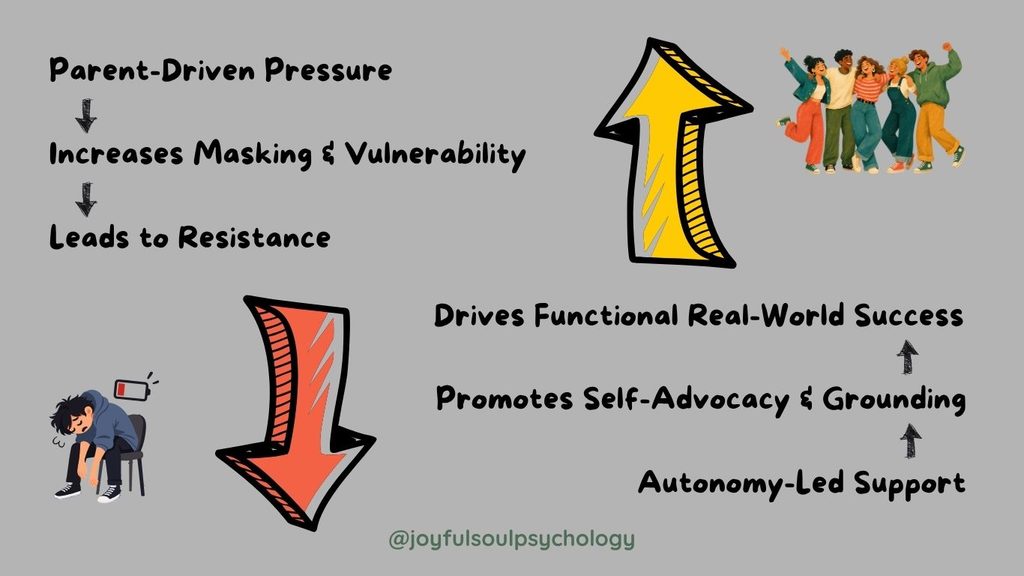
4 Clinical Strategies for Parents to Help Their Young Adult Cope
Successful therapeutic outcomes rely heavily on the home environment. Here are four functional, evidence-based strategies to implement today:
1. Yield the Agenda
Let your young adult own the relationship with their speech therapist. Step out of the goal-setting process. If they prioritise learning how to order food confidently over correcting a speech impediment, respect that choice. When goals are client-centered and strengths-based, engagement skyrockets.
2. Shift from “Correcting” to “Validating”
Correct your young adult’s speech mechanics, pacing, or conversational habits at home has a time and space. Constant reminders to “slow down,” “speak clearly,” or “look at me” amplify social anxiety and reinforce the belief that they are fundamentally flawed. Instead, focus entirely on the substance of what they are saying. Make your home a safe containment field where their natural voice is enough.
3. Respect the Post-Session Decompression Window
Speech and language therapy is rigorous cognitive, linguistic, and emotional work. When your young adult finishes a session, do not immediately debrief them with questions like, “What did you learn today?” or “What did the therapist say?” Give them a low-demand, quiet window to rest and regulate their nervous system.
4. Honor Alternative Communication Styles
A neurodiversity-affirming approach honours all functional communication. If your young adult prefers using text messages, writing, or visual tools to process complex concepts during stressful moments, validate it. Communication is about connection and self-expression. It’s less about matching a rigid, neurotypical template.
The Power of Multidisciplinary Support at Joyful Soul Psychology
Linguistic and communication challenges rarely exist in a vacuum. A young adult struggling with social communication often experiences underlying executive functioning challenges (common in ADHD) or emotional blocks like low self-esteem, high social anxiety.
That is why our approach at Joyful Soul Psychology is holistic. Our AHPC registered speech therapist and coach work collaboratively alongside our registered psychologist, who are both special needs specialists. By integrating speech language therapy with neurodivergent support and specialised coaching, we don’t just treat symptoms. We support the whole human, helping them step into self-discovery and fulfilment.
Partner with Us for the Next Chapter
Watching your young adult navigate communication barriers can be challenging, but you do not have to carry this transitional phase alone. By shifting your role from a director to a supportive partner, you pave the way for their lasting independence.
If you are ready to connect your young adult with a safe, accepting, and evidence-based environment where they can build real-world communication confidence, just as they are, we are here to welcome them.
Take the first step today. Schedule a session to experience how our personalised speech and language therapy services can empower your young adult’s journey.
Frequently Asked Questions
How long does speech therapy take for young adults?
Because adult speech therapy is highly goal-oriented, the duration depends entirely on the individual’s targets. Some young adults achieve their desired confidence in specific workplace settings within a few months, while others prefer ongoing structural support during major life transitions.
My young adult is highly resistant to attending therapy. What should I do?
Resistance is usually a protective mechanism against shame or a fear of being forced into compliance. We recommend starting with a low-pressure discussion focused entirely on their frustrations, rather than your concerns. You can also invite them to join our free 15-minute call directly so they can experience our non-judgmental approach firsthand.
Do you provide support for neurodivergent adults who struggle with sensory overload?
Yes. Our clinical space and therapeutic strategies are tailored to be neurodivergent-friendly. We focus heavily on sensory regulation, and self-advocacy alongside traditional communication development.
What’sApp +65 8835 3015 / Email contact@joyfulsoulpsychology.com / IG https://www.instagram.com/joyfulsoulpsychology/ / JSP Supports https://joyfulsoulpsychology.com/services/

