
Why Emotional Development Matters
Emotional development is the scaffolding for learning, relationships and independence. When individuals can recognise feelings, self-soothe, solve problems and read others, they stay engaged at school, form friendships and navigate daily life. When emotional skills lag, frustration, withdrawal, anxiety or meltdowns reduce participation and opportunity. That’s why targeted, consistent support across clinic, home and school matters.
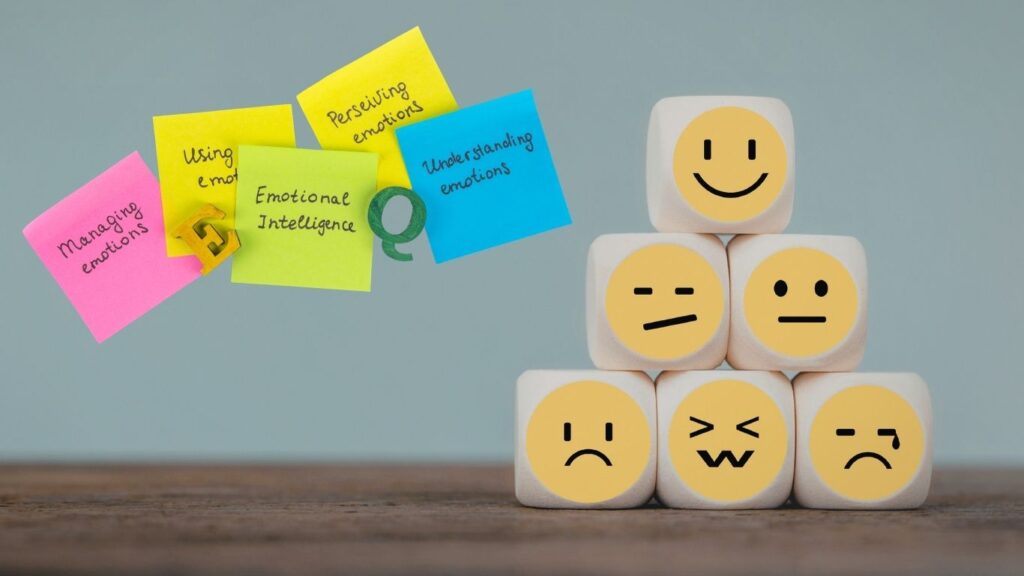
Emotional Development Across Life Stages
Core affect & co-regulation
- What develops: Basic emotions appear (joy, distress, interest, disgust); Social smiling, eye contact, and attachment behaviours; Infant depends on caregiver to calm (co-regulation).
- Practical tip: Caregivers respond quickly and soothingly to distress (voice + touch). This builds trust and regulation capacity.
Emotion expression & beginnings of self-soothing
- What develops: Broader emotion repertoire (anger, fear, surprise); Begins to use simple self-soothing (thumb, blanket) and basic words for feelings (“happy”, “sad”); Starts to understand simple cause–effect for emotions.
- Practical tip: Model short labels (“You’re sad — it’s OK”) and teach one calming routine (e.g., deep breath + hug).
Emotion vocabulary & basic regulation
- What develops: Rapid growth in emotion words and talking about feelings; Early perspective-taking (knows someone else can feel different); Beginning impulse control (waiting turns, brief delay tolerance).
- Practical tip: Use storybooks and play to name emotions and practise simple repair phrases (“I’m sorry — I didn’t mean to”).
Self-control, problem solving, peer skills
- What develops: Better inhibitory control and longer attention spans; Understands mixed emotions and can follow multi-step social rules; Peer relationships become important; social comparison begins.
- Practical tip: Teach problem-solving steps (Stop → Think → Choose) and use visual checklists for multi-step social tasks.
Perspective-taking & emotion regulation strategies
- What develops: Improved perspective-taking (seeing multiple viewpoints); Uses strategies (cognitive reappraisal, distraction) more effectively; Peer acceptance and identity exploration increase emotional salience.
- Practical tip: Coach on strategy choice (“If anxious, try 3 deep breaths or name 3 things you see”) and practise in role-play.
Identity, emotional complexity, social sensitivity
- What develops: Stronger self-reflection and meta-emotion awareness; Emotions become more nuanced; increased intensity and reactivity (normal); Developing autonomy and more complex social relationships.
- Practical tip: Encourage reflective conversations (What helped you feel better last time?) and support safe independence with scaffolds.
Emotional integration & social independence
- What develops: Mature(er) regulation, long-term planning, and stable identity formation for many; Relationship skills (intimacy, conflict resolution) deepen; Continued refinement of coping strategies.
- Practical tip: Focus on transferable life skills: emotion naming + problem solving + planning (e.g., budgeting emotional energy, scheduling breaks).
Individual variability
When individual variability is large, using assessment-guided planning provides a structure. Please note:
- Variation is normal: neurodivergent individuals (autism, ADHD, DS) may follow different timelines — the skills are teachable, but teaching style must adapt (visuals, repetition, sensory supports).
- Early supports matter: consistent co-regulation, vocabulary teaching, and scaffolded practice speed development and protect mental health.
- Measure small wins: track one or two simple indicators (use of calming strategy, correct emotion labels, independent completion of a social step) to guide support.
General profile
- Down Syndrome: Strengths – high social interest, warmth, visual learning; strong motivation for social connection.
- Autism: literal language processing, sensory triggers, difficulties inferring subtle social cues; strong visual learning potential.
- ADHD: emotional lability, impulsive reactions, slower recovery from upsets, executive-function challenges.
- Co-mobilities: may combine features; supports should be highly individualised.
- Variances: expressive language, processing speed, working memory, sensory sensitivity, and alexithymia (difficulty naming feelings).
- Guided support: with visual, repeated teaching and multi-disciplinary supports, many individuals with learning differences make meaningful gains in emotion awareness and regulation, at time may need longer practice and environmental scaffolds. Coaching families and teachers so skills generalise.
What happens when emotional skills are under-developed
- Immediate: frequent meltdowns, shutdowns, difficulty following classroom instructions.
- Intermediate: fewer peer invitations, reduced group participation, missed learning opportunities.
- Long-term: anxiety, lower independence and fewer social opportunities without timely supports.

Core SMART goals
- Emotion awareness — identify and label feelings.
- Self-regulation — have a reliable calm-down routine.
- Social problem-solving — scripts for repair and negotiation.
- Generalisation — use skills across clinic, home and community.
- Family–school partnership — consistent language and routines.
Possible strategies:
- Teach emotion words visually (photos, icons, videos). Start with 4–6 core emotions.
- Scripted social stories & role-play for common triggers with rehearsal.
- Calm-down toolkit (2–3 personalised strategies practiced repeatedly).
- Video modelling and in-session graded exposure to anxiety triggers.
- Language scaffolds: sentence frames (“I feel ___ when ___; I need ___”).
- Parent/teacher coaching: brief coaching on exact language, prompting and fading.
- Sensory adaptations: coordinate with OT for triggers and environmental supports.
Measurement & fidelity;
- Weekly metrics: # independent strategy uses, meltdown frequency/duration, emotion labelling score, teacher task-completion.
What parents can do (home strategies)
- Model feelings: narrate emotions and regulation out loud.
- Use visuals: mood check-ins and emotion charts.
- Create a calm corner: consistent space with 3 items (sensory tool, breathing card, quiet activity).
- Rehearse scripts: role-play “I need a break” or “Can you repeat that?” in low-stakes times.
- Consistent routines: checklists for multi-step tasks reduce surprises.
- Praise attempts: focus on effort, not only outcomes.
What teachers can do (classroom-ready)
- Visual schedules & steps: first-then boards, one-step instruction cards.
- Emotion language in curriculum: quick 5-minute check-ins, social stories for classroom events.
- Predictable routines & wait time: pause 5–10 seconds after instructions.
- Structured social activities: pair roles, project checklists and supervised social practice.
- Calm signal: discreet sign the student uses to request a break.
Why strength based approach matters
A strengths-based stance honours identity and increases engagement. We learn best when our interests are used, voices are respected and supports make life more navigable. It not about erasing differences, but to expand participation and wellbeing.
Outcomes families can expect (realistic)
- Improved ability to label feelings and ask for help.
- Increased use of at least one calming strategy in everyday situations.
- Fewer prolonged meltdowns and quicker recovery.
- Better participation in structured social activities; improved caregiver confidence in supporting emotions.
Gains are incremental and best sustained when families and schools consistently apply the same routines and visuals.
How We Can Support: The Joyful Soul Pathway
Emotional development is incremental and context-dependent. With consistent, visual, and neuro-affirming supports across clinic, home and school, most young people — neurotypical, with Down syndrome, or neurodivergent — increase emotion awareness, regulation and social problem-solving.
At Joyful Soul Psychology, we don’t just work on “speech” or “language” or “feelings”, we work on the whole individual.
- School, Community, Work Readiness Programmes: A small-group or individual journey to practice skills. Example, PBIS, Lego® therapy, PEERS, DBT.
- Social Coaching/ Therapy: one on one sessions targeted support to master learning and working memory, social language, discourse, sentences, speech sounds, emotional regulation.
Together, let’s work on a path that support your child’s emotional development. Not to “fix” personality, it’s giving all individuals with the tools and environmental supports they need to participate, learn and enjoy life’s journey. Let’s make school, transitions, workplace feel doable again, step by step.

