
When pressure hits, teams either pivot or freeze. Agility isn’t just about processes, it’s about how people’s minds respond under stress. With short, repeatable practices teams can learn to notice reactivity, shift into curiosity, and choose clearer action.
Why agility matters
Leadership and team agility are the difference between surviving a crisis and turning it into an opportunity. Reactive leadership (e.g. micromanaging, avoiding hard conversations, or chasing the next shiny solution) slows teams down. The great news is agility is a skill we can strengthen with consistent practice, not an innate trait.
Our thoughts
Agility at work depends on three things:
- Awareness of automatic reactivity. Under pressure the brain favors fast survival responses (fight/flight), which narrow thinking and increase blame.
- A shift mechanism. Brief grounding or attention-shifting exercises quiet the survival response and allow the prefrontal, problem-solving parts of the brain to re-engage.
- Action habits. Short, structured actions (framing questions, roles, time-limited experiments) turn insight into measurable change.
Positive-psychology research frames this as moving from a reactive “survivor” mode into an intentional “sage” orientation, a mental state that keeps curiosity, empathy and problem-solving active even under stress. Practically, that means leaders can learn to pause, choose, and act rather than react.

Practical workplace examples
- A product team hits a missed deadline → instead of blaming, the leader opens with a 3-minute “Team Weather” card or check-in and asks one solution-focused question. Result: less defensiveness; immediate small experiment agreed.
- Team Weather turns vague tension into shared, low-cost data. That shared data reduces guessing and defensiveness, focuses the group on one clear next step, and frees cognitive space for decisions, so meetings move from stuck to actionable, fast.
- Members understand = When more than 30% report negative weather, we’ll take 2 minutes to decide one small thing that would help and name an owner.
- The mechanisms of how it actually works:
- Rapid situational alignment — Everyone names the same basic signal (e.g., “foggy,” “rushed,” “calm”), so the group stops debating whether there’s a problem and can immediately decide what to do about it.
- Affect-labeling lowers alarm — Putting a simple label on a feeling quiets the brain’s automatic threat response, restoring access to reasoning and collaboration.
- Neutral language reduces blame — “Team is stormy” is less personal than “You missed the deadline,” so people stay in solution mode instead of defending.
- Built-in prioritisation cue — The team can use the weather as the decision filter: if the weather is “stormy,” triage; if “calm,” pursue stretch work. This shortcut speeds choices.
- Fast ownership & closure — The ritual ends with naming one micro-action, an owner, and a follow-up. That immediate commitment prevents ideas from evaporating and makes outcomes durable.
- Normalises sharing & psychological safety — Regular short check-ins teach the team that mood data is valid input. Over time people share earlier, so fewer issues escalate into big blockers.
- Inclusion of quieter voices — Structured turns ensure everyone’s pulse is heard without long monologues, so alignment reflects the whole team, not just the loudest voices.
- A manager notices micromanaging creeping in → sets a 48-hour “experiment” where decisions under $500 are delegated; reviews outcome in next after action review (AAR).
- A hybrid team struggles with attention → establishes a shared “deep-work” window (90 mins twice weekly) where meetings are minimized and focused work is protected.
Activities to explore
1. Catch → Pause → Choose (3 minutes) — individual micro-skill
- When: at the first sign of tension in a meeting.
- Do: notice the feeling, name it (“that’s my judge/avoidance”), take 3 slow breaths, ask: “What is one small step that will move us forward?”
- Why: naming & breath breaks the autopilot loop and creates space for choice.
2. 10-Minute Agile Debrief — team experiment
- Set up: timebox 10 minutes at end of sprint/meeting.
- Prompt: Each person shares (1) one win, (2) one small block, (3) one micro-action they’ll try next.
- Outcome: builds small, testable habits and normalises experimentation.
3. Role-Swap Card (15–25 mins) — for manager & direct report
- Materials: simple image cards (any deck from the OH Card series if you have one).
- Do: each picks a card representing how they believe the other feels; compare; ask “what surprised you?” and identify one change to communication or role clarity.
- Why: externalised metaphor lowers defensiveness and speeds empathy-building (useful for neurodivergent communication differences).
Practical accommodations
Inclusive agility requires practical adjustments so all minds can contribute: clear written agendas, predictable meeting rhythms, visual timelines, flexible deadlines where possible, quiet options, and outcome-focused evaluation rather than process monitoring. These measures reduce the “masking” load and let neurodivergent strengths surface while protecting wellbeing. Providing a flexible, strengths-based approach and reasonable adjustments even without formal diagnosis.
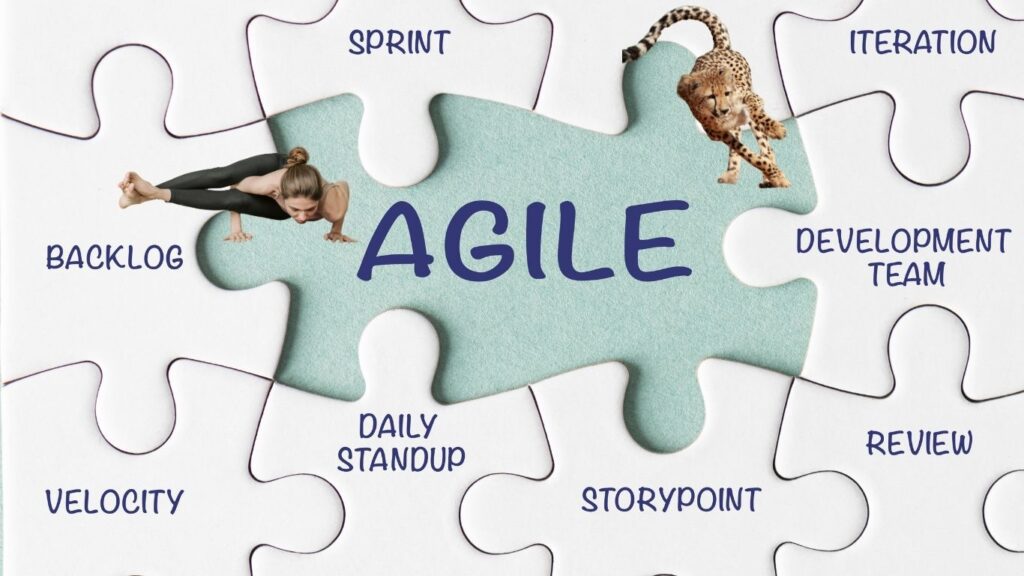
Framing for agility conversations
At work, an example of framing agility conversations could be “Which small choice will move us closer to our desired result?” It encourages focusing on controllable choices and relationship-building habits (listening, planning, doing). IT also avoids blame and centres responsibility, a practical match for short experiments and accountability loops.
Need support awaking the agility in you?
Agility isn’t a program; it’s a daily habit of noticing, pausing, and choosing small experiments. At Joyful Soul Psychology, we offer specialised coaching and therapy to help you thrive on your own terms. Contact us today to start your journey toward a more present, agility life to harness the leader in you.
This blog was inspired by the article Why Mental Fitness Is the Key to Unlocking Your Leadership Agility.

